Why Strollers—and Even Bike Trailers—Need Special Attention in the Fall
The most important maintenance steps for fall
Clean the wheels and tires regularly
Mud, leaves, and small pebbles tend to stick to wheels and axles particularly quickly in the fall. For the frame and other wipeable surfaces, lukewarm water, a soft cloth, and a little mild detergent are often sufficient. You can carefully remove coarse, dried-on dirt with a paintbrush or a soft brush.
For heavier soiling, it’s better to clean specific areas rather than hosing down the entire stroller or bike trailer with a lot of water. Wheel bearings, joints, and other mechanical components, in particular, should not be unnecessarily soaked. Harsh cleaners, abrasives, or solvents can also damage materials and surfaces. If in doubt, it’s always a good idea to check the manufacturer’s care instructions.
For models with pneumatic tires, such as the TFK mono 3 or the Thule Chariot Cross 2, it’s also a good idea to check the tire pressure regularly, especially as temperatures drop.
Wash fabric covers and let them dry completely
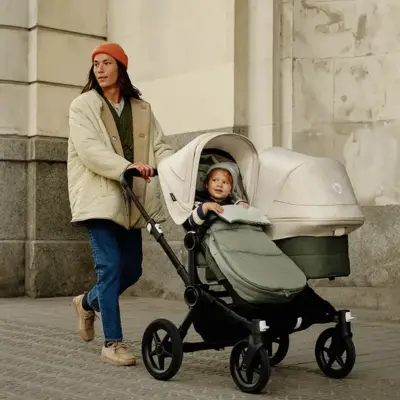
Washable covers are especially practical in the fall. On the Bugaboo Fox 5, for example, various fabric parts can be removed and washed. It’s also worth checking the features of bike trailers: On the Thule Chariot Cross 2, the padded seats are removable, making them easier to clean. Always follow the care instructions for each specific part.
After cleaning, the most important rule is: let everything dry completely first, then reassemble or store it. If fabrics and upholstery remain damp for an extended period, unpleasant odors, mildew stains, or mold can develop.
The 5-minute routine after rain and mud:
- Remove leaves, small stones, and coarse dirt immediately
- Quickly check the wheels and loosen any caked-on mud
- Wipe down the wet or dirty frame with a cloth
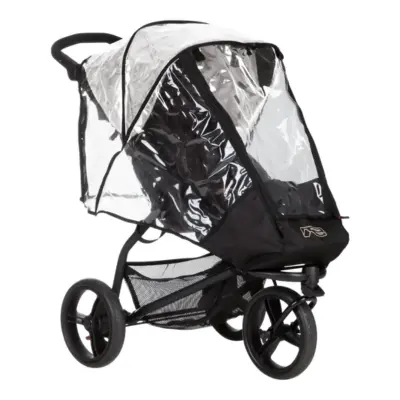
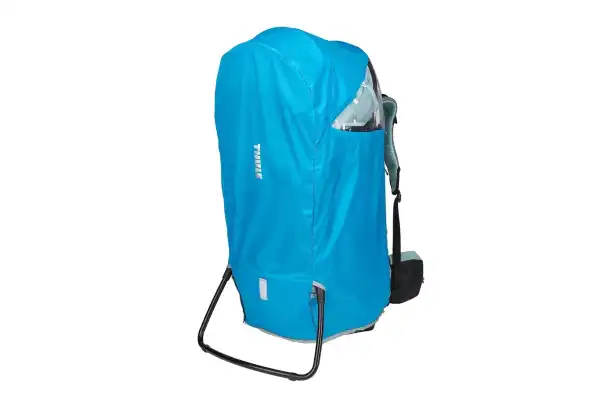
- Remove the rain cover and let it dry separately
- Let the stroller air out in an open position in a dry, well-ventilated place
Keep the frame dry and check the joints
Check the brakes regularly
Wet leaves, mud, and damp paths can make surfaces slippery in the fall. This makes it all the more important that the brakes work reliably. Regularly remove dirt and leaves from around the wheels and brake mechanism, and check that the parking brake engages smoothly.
With the Thule Urban Glide 3, large air-filled tires, suspension, and a built-in hand brake come into play for rougher fall paths—which is handy when your stroller route takes you beyond just dry asphalt.
Drying the Stroller Properly and Preventing Mold
Especially in the fall, it’s not necessarily the rain itself that’s the biggest problem, but rather the moisture that remains in the stroller afterward.
Therefore, avoid folding up a wet stroller right away and storing it in the basement, garage, or trunk for several days. Moisture can linger in fabrics, upholstery, and hard-to-reach crevices, leading to unpleasant odors, mildew stains, or mold.
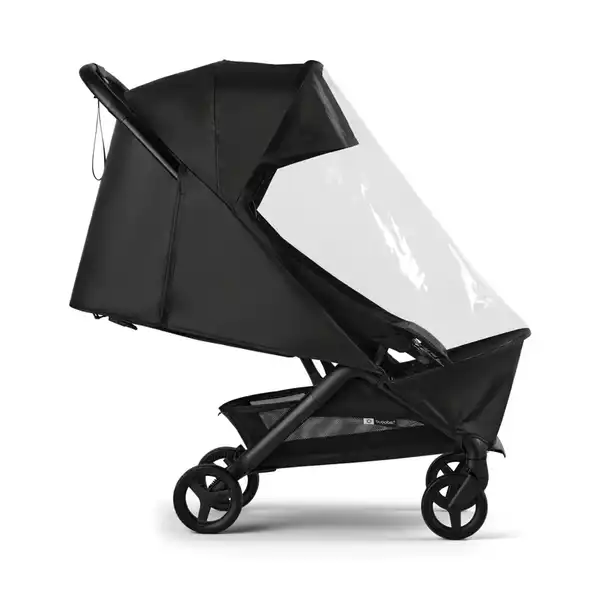
Instead: Remove the rain cover, open up damp fabrics as much as possible, and let the stroller dry completely in a dry, well-ventilated place.
The rain cover itself should also be allowed to dry before it’s folded up and stowed away. If it’s placed in the basket or a bag while still damp, the moisture will remain trapped there for an unnecessarily long time.
A quick fall tip: On especially muddy days, place an old towel in your entryway or in the car. This lets you quickly wipe down the wheels and frame before stowing the stroller.
The Right Accessories - Rain Cover


Where to store the stroller when space is limited?
These strollers are particularly well-suited for fall
If you’re often out and about in the rain, mud, and on uneven paths, you can look for features like large wheels, suspension, ample storage space, and weather-appropriate equipment when choosing a stroller.
- The new Bugaboo Donkey 6 features, among other things, a carrycot with larger ventilation openings and a spacious under-seat basket. Especially practical for growing families: It can be expanded from a single to a double and is also available as a twin model.
- The Thule Urban Glide 3 is designed for a variety of surfaces with large air-filled tires, suspension, and an integrated handbrake—perfect for forest trails, parks, and uneven fall paths.
- The Mountain Buggy Urban Jungle is designed as an all-terrain stroller, making it a great option for families whose walks regularly take them beyond paved surfaces.
- The TFK mono 3 is also designed for various terrains, and with its all-terrain features, it’s ideal for families who spend a lot of time outdoors, even in changeable weather.
Strollers for Fall
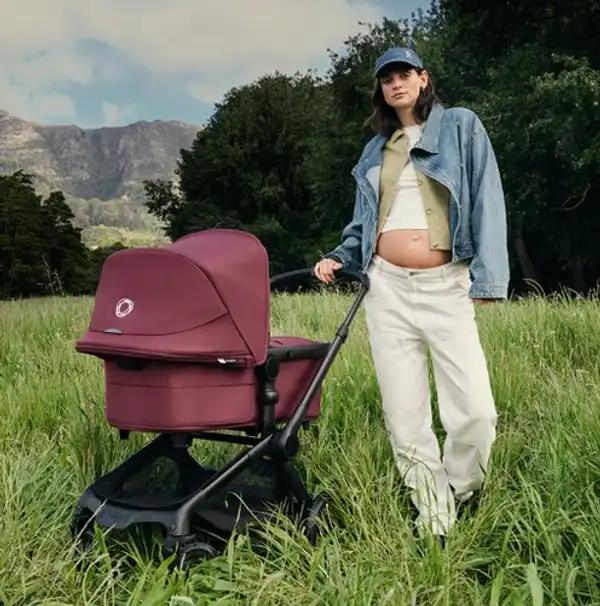
Bugaboo Donkey 6 Single
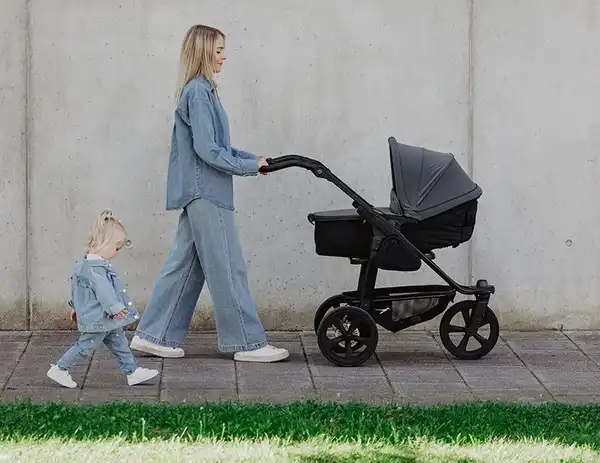
TFK mono 3
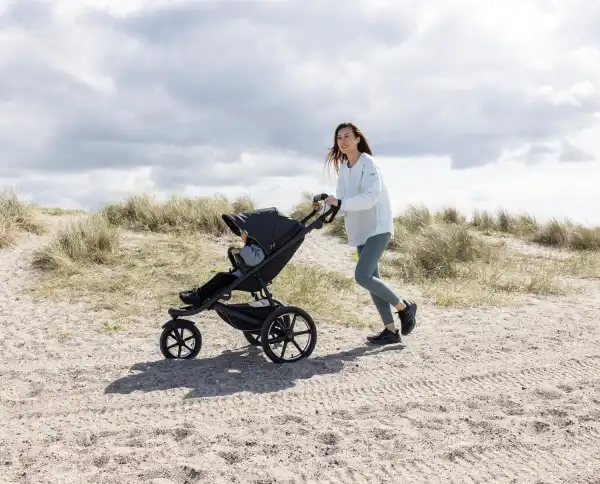
Thule Urban Glide 3
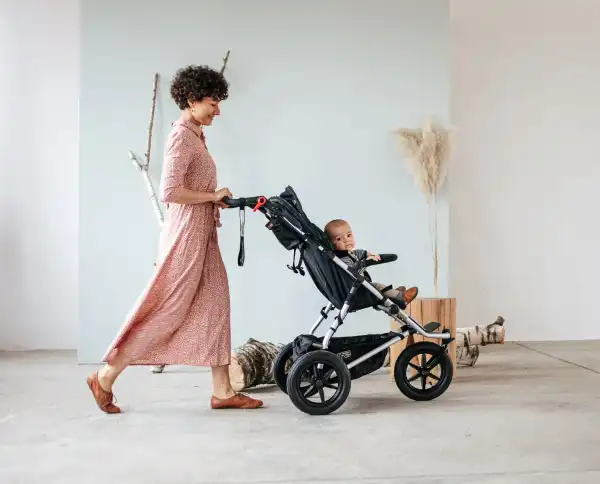
Mountain Buggy Urban Jungle


Don’t forget: Accessories need fall maintenance, too
It’s not just the stroller itself that takes a beating in the fall. Rain covers, footmuffs, shopping baskets, and organizers also collect moisture, leaves, crumbs, and dirt.
After a wet walk, the rain cover shouldn’t just be crumpled up and tossed into the basket—it should be allowed to dry completely first. For the footmuff, it’s worth checking the manufacturer’s care instructions regularly; washing temperature and cycle vary depending on the material.
The shopping basket is also often overlooked. Wet leaves and mud, in particular, accumulate here quickly and often go unnoticed longer than on the wheels.