
The start of school is a special moment for many families. While some children celebrate their first day of school, for others a new school year begins with new challenges. At the same time, parents often face the question: What is really needed, and what can be left out?
In fact, the start of school is about much more than just backpacks and pencil cases. A safe commute to school, an ergonomic workspace at home, and good organization in daily family life ensure that children start the new school year feeling confident and relaxed.
A safe commute to school gives children self-confidence
For many children, the daily walk to school is the first step toward independence. Whether on foot, by scooter, or later by bike, the most important thing is that your child feels safe and that the chosen mode of transportation is appropriate for their age and ability.
Especially during the first few weeks, it’s worth practicing the route to school together several times. Traffic lights, crosswalks, and potential hazards will quickly become part of a familiar routine. It’s best to allow a little extra time at the beginning so there’s no stress and your child can get to know the route at a leisurely pace.
For many elementary school children, a scooter is a practical alternative to a bicycle. Getting on and off is quick and easy; children can keep an eye on their surroundings while also practicing balance and coordination.
Once your child can ride a bike safely, the bike should not only be the right size but also equipped for safe riding on the road. Working brakes, reflectors, a bell, and lights are just as essential as a well-fitting bike helmet.
For children starting school, a 16-inch bike like the Woom GO 3 is often a good choice. Older elementary school children often benefit from a model like the Woom GO 4 with a 7-speed gear system, which makes even longer commutes to school comfortable. A properly fitting helmet, such as one from Puky, is a sensible way to round out the equipment.
Especially for beginner cyclists, safety comes primarily through practice. Before children can master the daily commute to school on their own, they should regularly practice starting, braking, checking over their shoulder, using hand signals, and turning safely in a quiet environment. The more often they practice different traffic situations, the more confidence and self-assurance they gain. Many elementary schools also prepare children for safe cycling in traffic as part of a “bicycle license” program. There, they learn important traffic rules and can put their skills to the test under supervision. Even though the “bicycle license” isn’t an official driver’s license, it teaches important basics. Parents should supplement these exercises at home or during rides together and walk or bike the route to school several times together before the child tackles it alone.
Tip: Even if your child already knows the route to school, it’s a good idea to walk or ride it together again after summer break. Construction zones, new traffic patterns, or changes to traffic light cycles may have occurred over the summer.
When younger siblings are along for the ride
Many parents are familiar with this situation: While one child has to go to school, the younger sibling is still waiting to head to daycare. Especially in the morning, every minute often counts.
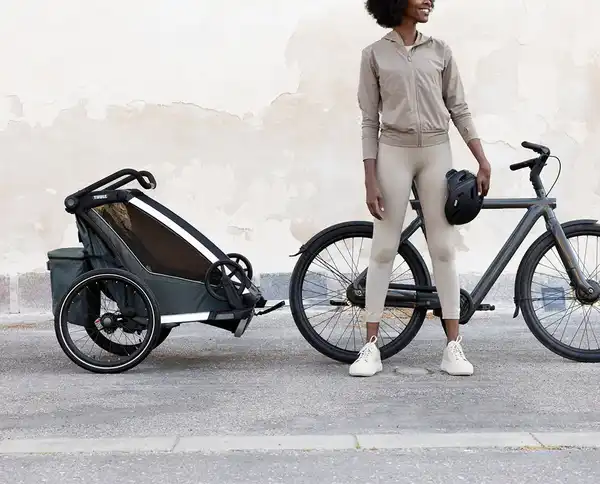
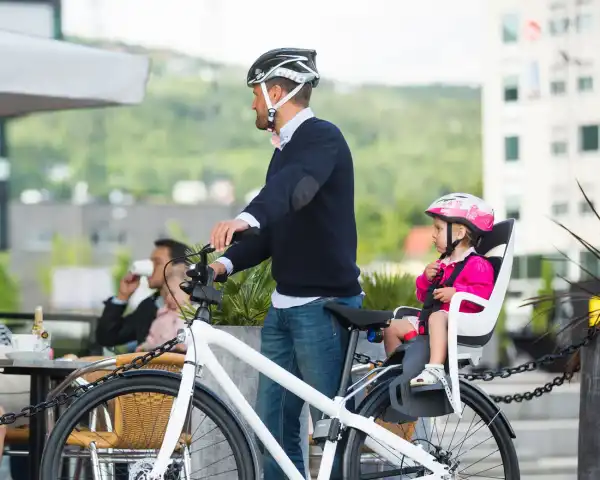
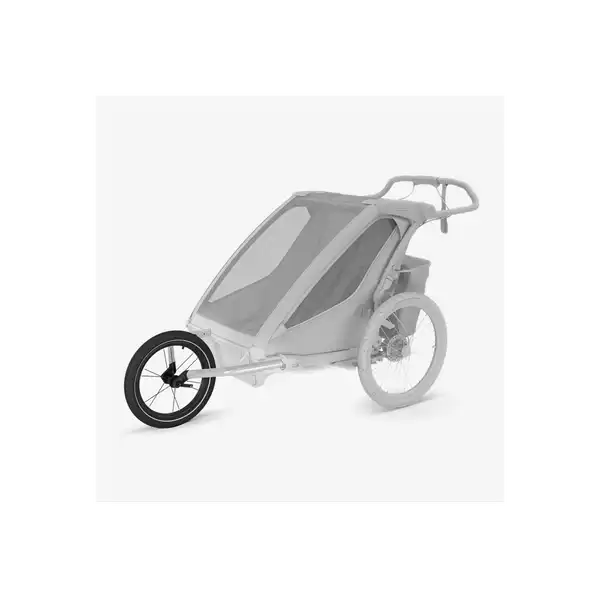
Flexible transportation solutions can help make daily life more relaxed. A bike trailer like the Thule Chariot Cross 2 can be used as a bike trailer, stroller, or jogger, depending on your needs. For shorter trips, a bike seat like the Hamax Caress offers a practical alternative.


Even if you drive your child to school, safety should never be overlooked. Children often outgrow their car seats faster than many parents expect. A car seat that grows with your child makes everyday life easier and can be used for several years.
Even the youngest children gain important experiences
Younger siblings often want to do what their older siblings do. Balance bikes help develop balance, coordination, and confidence in their own movements at an early age—skills that will also help later when riding a bicycle.
Above all, it’s important that the balance bike fits your child’s height and that they can place both feet firmly on the ground. Models like the Woom GO 1 are suitable for children ages 1.5 and up and provide a playful introduction to riding a bike.
It’s worth giving the backpack a quick check before school starts
After summer break, it’s worth taking a look inside the backpack. Often, crumbs, old worksheets, or dried-up pens have accumulated over the school year.
Together with your child, you can get the backpack ready for the new school year:
- Clean the inside and outside compartments
- Thoroughly clean the lunchbox and water bottle
- Test the pens and sort them out
- Remove old notes and notebooks
- Check that sports gear is the right size
Another tip: Anything that won’t be needed until after the break—such as slippers, sports gear, or arts and crafts supplies—can be prepared in advance and set aside. This saves time on the first day of school and prevents frantic searching.
A good study space makes learning easier
The start of school also marks the beginning of a new daily routine at home. Homework, reading, and arts and crafts are now regular parts of the day. A dedicated workspace helps children concentrate better and develop a study routine.
Many families start out at the dining table. In the long run, however, a dedicated desk is usually the better solution. Height-adjustable models grow with children over many years and support an ergonomic sitting posture.
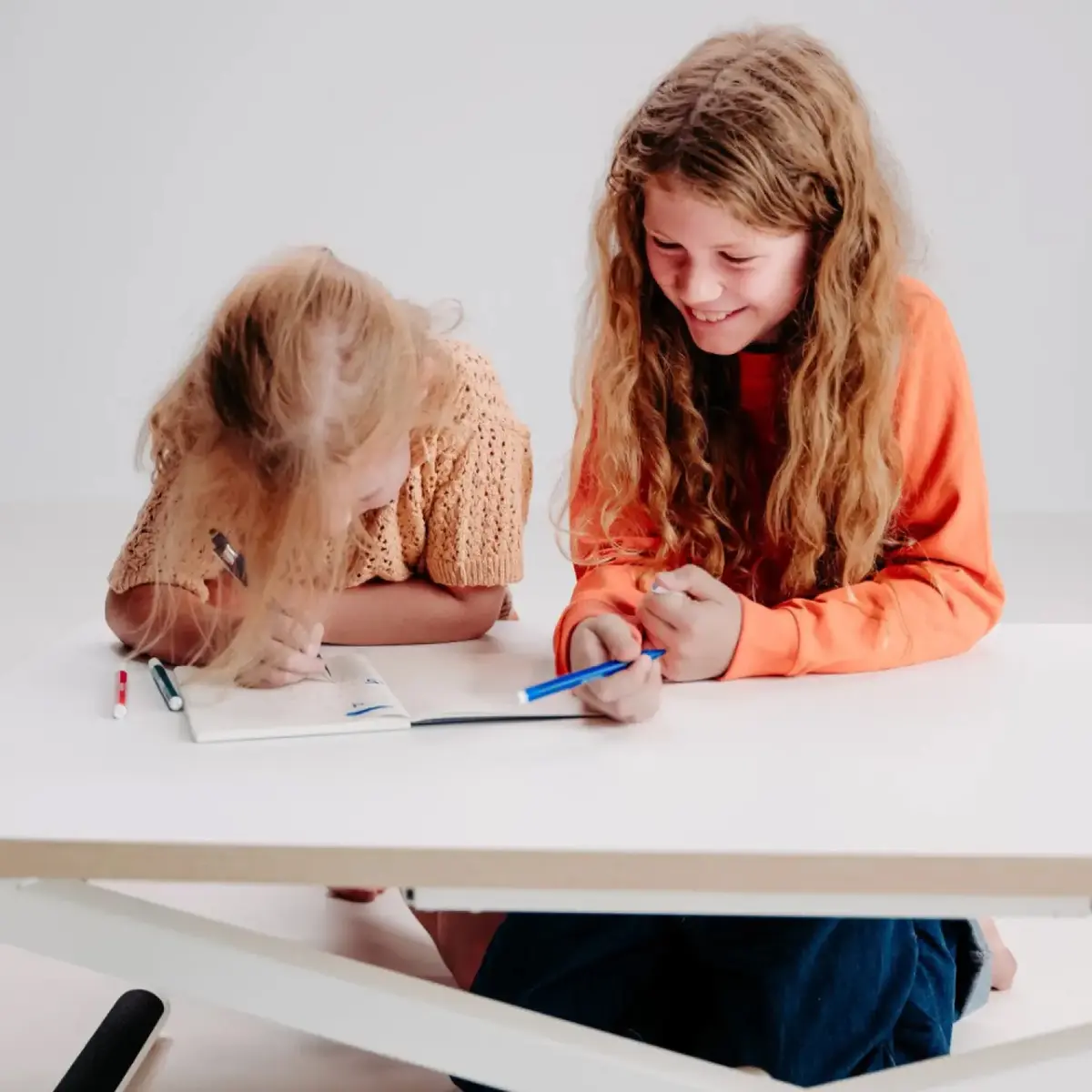
The poptop height-adjustable children’s desk can be adjusted to the child’s height without electricity or a crank and accompanies children from elementary school through adolescence.
Equally important is the right chair. Ergonomic children’s chairs promote a healthy sitting posture. For children with a strong urge to move, movable stools or so-called wobble chairs can be a useful addition. They allow for small movements while sitting and help many children stay focused on their homework. Sufficient natural light, a good desk lamp, and a workspace that’s as tidy as possible also create a pleasant learning environment.
Movement breaks are also an essential part of a successful daily learning routine. Stacking blocks give children the opportunity to move around playfully between homework sessions, practice their balance, or incorporate small movement exercises. Many children can concentrate better again after just a few minutes of movement. At the same time, stacking blocks promote coordination, creativity, and motor skills and can be integrated in many ways into everyday family life—from balancing to playful learning with colors, numbers, or letters.
Tips for a Relaxed First Day of School
The first day of school is a memory that stays with many families for a long time. With a little preparation, the day usually starts off much more relaxed.
- Walk or drive the route to school together several times beforehand.
- Pack the backpack, gym bag, and lunchbox the night before.
- Allow plenty of time in the morning and avoid rushing.
- Talk openly about any excitement or uncertainties—that’s completely normal.
- Create a little ritual, such as having breakfast together or taking a commemorative photo in front of the house.
- Make a point of setting aside some time after school so your child can talk about their first day of school in a relaxed setting.
Do you really need to buy everything new?
The start of school often brings the feeling that you need to buy a lot of new things. However, it’s usually worth taking a closer look at what you already have. Does the bike helmet still fit properly? Is the bike or scooter still the right size? Is the desk big enough for the new school year, or will a small adjustment suffice? Bicycles, child seats, desks, and scooters are often used for only a few years before children outgrow them or their needs change. That’s why more and more families are choosing to rent high-quality products. This allows you to flexibly adapt the equipment to your child’s growth without having to make a new purchase every time. It saves money, reduces unnecessary purchases, and conserves resources at the same time.
Well-Prepared for the New School Year
The start of school doesn’t have to be stressful. By practicing the route to school together, packing the backpack in advance, setting up a suitable workspace, and regularly reviewing major purchases, you can make the transition to the new routine easier for both yourself and your children.
Many products are only used by children for a limited time. That’s why it can be worthwhile to opt for flexible solutions—such as bicycles, child seats, bike trailers, or desks—that grow with the family’s needs.
In the StrollMe product catalog, you’ll find high-quality bikes, scooters, child seats, bike trailers, cargo bikes, and children’s desks available for rent—flexible, sustainable, and suitable for every stage of development.


