
The Most Important Points at a Glance
- Babies can’t regulate their body temperature as well as adults yet.
- Avoid the midday heat whenever possible and seek out shady spots.
- Check the area between the shoulder blades, just below the neck, regularly. If the skin there is warm but not sweaty, that’s a good initial indicator. Also, always pay attention to how your baby seems overall.
- Ensure good air circulation in the stroller and avoid using blankets over the canopy.
- Lightweight clothing made of breathable materials helps your baby release excess heat.
Why Babies Have a Harder Time Tolerating Heat
While adults can regulate their body temperature well through sweating, this mechanism isn’t yet fully developed in babies. At the same time, their skin is much more sensitive, and their bodies lose fluids more quickly. That’s why a baby can overheat much faster than an adult on a warm summer day. Direct sunlight, stagnant air, or overly warm clothing increase the risk in particular. However, that doesn’t mean you have to spend hot days exclusively indoors. If you keep a few simple things in mind, you can enjoy the summer in a completely relaxed way.
How can you tell if your baby is too warm?
Babies’ hands and feet often feel cooler, so they aren’t a reliable indicator of whether your baby is too warm overall. In addition to body temperature, it’s especially important to pay attention to your baby’s behavior.
If your baby becomes unusually restless or noticeably sleepy, isn’t feeding as well as usual, is breathing faster, or seems generally lethargic, these can be warning signs. You should also take reddened, very warm skin and heavy sweating seriously. At the first signs, move your baby to a cool, shaded place, remove any extra clothing, and see if they recover.
| Situation | Possible Signs | What’s Important Now |
|---|---|---|
| Baby is too warm | Very warm or sweaty neck, restlessness, flushed skin | Find a shaded spot or a cooler room, remove any extra clothing, and keep an eye on the baby |
| Baby seems unusual | Unusual tiredness, difficulty feeding, rapid breathing, or significantly altered behavior | Gently cool the baby down and seek medical advice |
| Acute emergency | Loss of consciousness, seizures, or breathing problems | Call 112 immediately |
Heatstroke is a medical emergency. Gesund.bund.de recommends calling emergency services if the body temperature reaches 40 degrees or higher. Loss of consciousness, difficulty breathing, or seizures are also reasons to call emergency services immediately.
What should I do if my baby gets too hot?
First, move your baby out of the heat to a cool, shaded place and remove any excess clothing. To gently cool your baby down, you can wipe their skin with a damp cloth that isn’t too cold. Then watch your baby closely to see how they’re doing. If they seem unusually sleepy, aren’t feeding well, or their condition isn’t improving, you should seek medical advice.
Strollers in Summer: Shade, Yes; Trapped Heat, No
Babies Sleeping in Hot Weather: Ensure
a Cool Sleeping Environment
Our cradle bestsellers


On warm summer nights, it can also be harder for babies to fall asleep. During the day, closed shutters, curtains, or blinds help keep the heat out. It’s best to air out the room at night or early in the morning when the outside temperature is lower.
As a general guideline, a bedroom temperature of around 18 degrees is often recommended for babies. In the height of summer, however, this isn’t always possible. kindergesundheit-info.de recommends ensuring that bedrooms don’t get hotter than 26 degrees if possible and letting the baby sleep in the coolest room in the home. At 25 to 30 degrees, a thin pair of footless pajamas or a short-sleeved onesie may be sufficient.
| Situation | Clothing | Suitable materials |
|---|---|---|
| Warm summer day | Light, airy clothing | Cotton, wool, silk |
| Very hot day | As few, light layers as possible | Lightweight cotton, wool, silk |
| Outside in the shade | Breathable clothing | Cotton, muslin, or lightweight wool and silk |
| Outdoors in the sun | Lightweight, covering clothing and a sun hat | Lightweight, tightly woven cotton |
| Indoors in extreme heat | Very light clothing; if necessary, just a diaper | Lightweight cotton or muslin |
Can my baby overheat in a baby carrier?
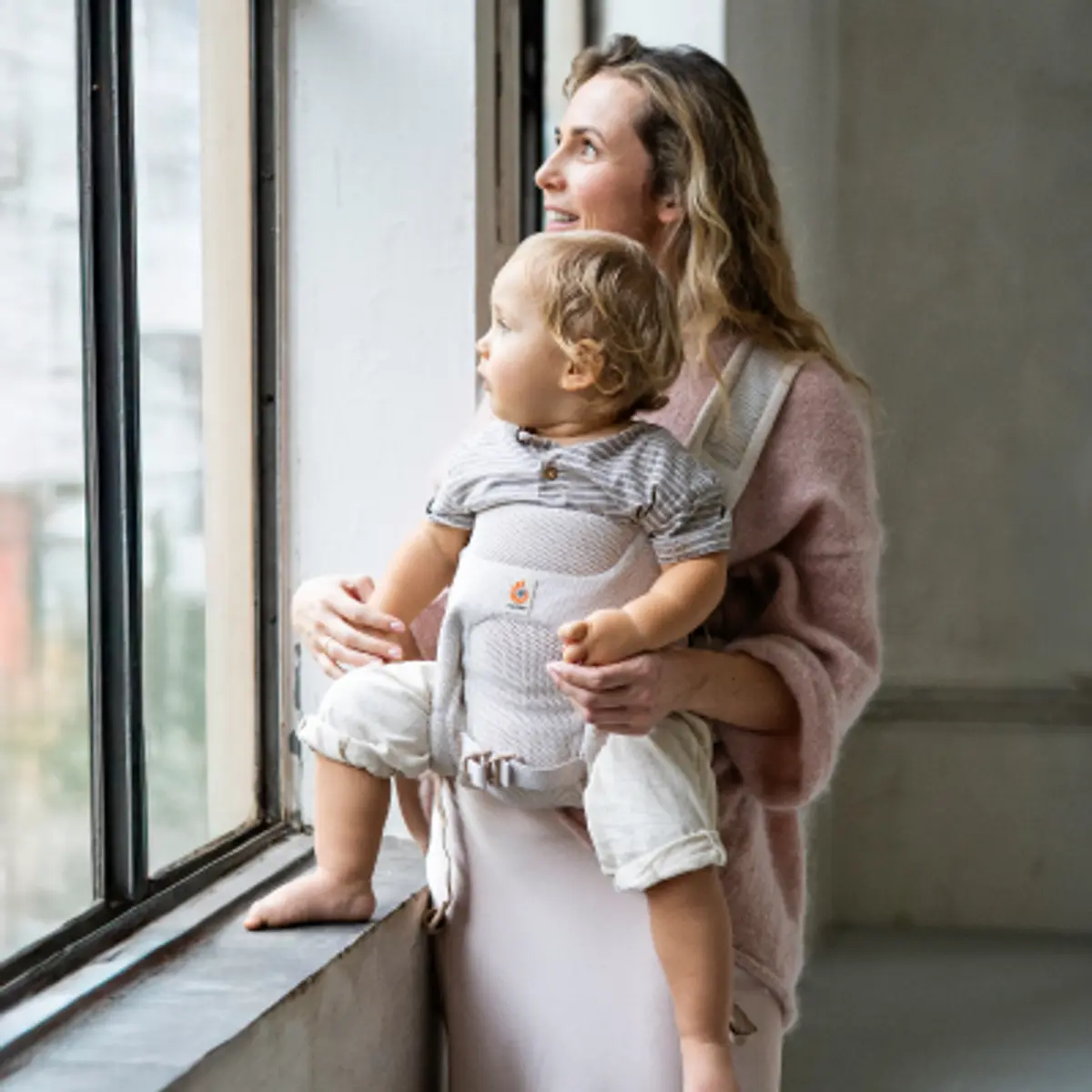
Many parents don’t want to give up using a baby carrier even in the summer. This isn’t a problem in principle, since closeness gives babies a sense of security and comfort. It’s a good idea to dress your baby in lightweight cotton or linen and, if possible, take walks during the cooler morning or evening hours. Take a break in the shade if needed. It’s especially important to keep your baby’s head and face uncovered so they can breathe freely at all times.
Babies in Cars During Hot Weather: What Parents Should Keep in Mind
Five Simple Tips for Hot Days
With a few simple habits, you can enjoy a stress-free summer.
- Plan walks for the morning or evening whenever possible.
- Choose light-colored, breathable clothing made of cotton or linen.
- Breastfed babies can be nursed more frequently in hot weather. As you introduce solid foods, it becomes more important to provide additional water. Infant formula should not be diluted further on your own.
- Protect your head and skin with a sun hat and plenty of shade.
- A small stroller fan can provide a more pleasant breeze on warm days. Attach it so your baby can’t reach it, and don’t direct the airflow at their face or body all the time.
A Relaxing Summer Starts with Small Habits
Summer with a baby doesn’t have to be a cause for worry. If you understand your child’s needs and pay attention to a few simple things, you’ll create the best conditions for relaxing outings, peaceful afternoon naps, and many shared memories.
It’s often the small decisions that make all the difference: a shaded path instead of direct sunlight, lightweight clothing instead of an extra layer, or a short break in the shade. This way, you can enjoy the warm months together and focus entirely on what makes summer with a baby so special.


