
Renting a Baby Carrier, Shoulder Carrier, or Backpack Carrier: A guide to help you find the right carrier for your baby and your daily life, complete with product recommendations.
Especially in the first few weeks, many babies want nothing more than to be right next to Mom or Dad. At the same time, daily life goes on, and sometimes it would just be nice to have both hands free. That’s exactly when a baby carrier or a wrap can make things much easier. When searching for the right model, however, terms like “wrap,” “half-buckle,” and “full-buckle” quickly come up. What sounds complicated at first is actually quite easy to distinguish. The most important thing is finding the carrying system that suits your baby, your body, and your daily routine.
Why isn’t there just one perfect carrier?
| Carrying Style | Particularly suitable for | Advantages | Example & Rental Price at StrollMe |
|---|---|---|---|
| Baby carrier | Everyday life, walks, travel, and lots of closeness | Close to the body, compact, and ready to use in a flash | Ergobaby Adapt Soft Flex Mesh, starting at 6.20 €/month |
| Shoulder carrier | Outings with older babies and toddlers | Lightweight, compact, and a great view for the child | MiniMeis shoulder carrier, starting at €4.90/month |
| Backpack | Hikes with a securely seated child | Sturdy, designed for extended use, and with extra storage space | Thule Sapling, currently starting at 15.50 €/month |
Important: Not every carrier is suitable for every age. The key factors are your child’s developmental stage as well as the size and weight specifications provided by the respective manufacturer. While many classic baby carriers are suitable for newborns, shoulder carriers and backpacks are only appropriate once the child meets the necessary developmental requirements.
Baby Carrier, Shoulder Carrier, or Backpack Carrier: What’s the Difference?
Baby Carrier for Closeness and Everyday Life
The Shoulder Carrier for Outings with Older Children
The Backpack Carrier for Hikes and Longer Trips
Good to know: What do “half buckle” and “full buckle” mean?
When searching for baby carriers, you may also come across terms like “half buckle” and “full buckle.” These terms primarily describe how a baby carrier is put on.
With a “half-buckle” carrier, the waist belt is usually fastened while the shoulder straps are tied. A “full-buckle” carrier, on the other hand, requires no tying and is adjusted using buckles.
However, you don’t necessarily need to remember these terms when choosing a baby carrier. It’s much more important that the specific model suits your child’s developmental stage, your body, and your daily routine.
Our baby carrier bestsellers


Which baby carrier suits your daily life?
Once you’ve decided on the basic carrying style, it’s time to look at the details. Material, weight, adjustment options, and, of course, how comfortable it feels to wear can all help determine which model is ultimately the best fit for you.
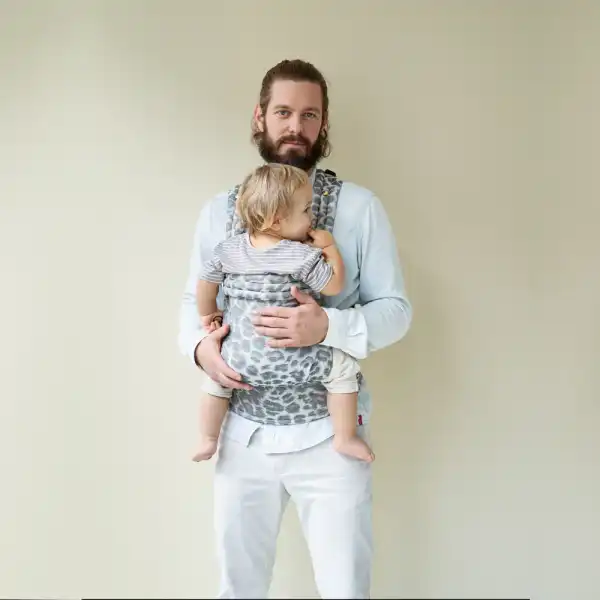
For style-conscious parents: If you value design as much as function and comfort, take a look at the Artipoppe Zeitgeist baby carrier. It combines high-quality craftsmanship with a particularly design-oriented look.
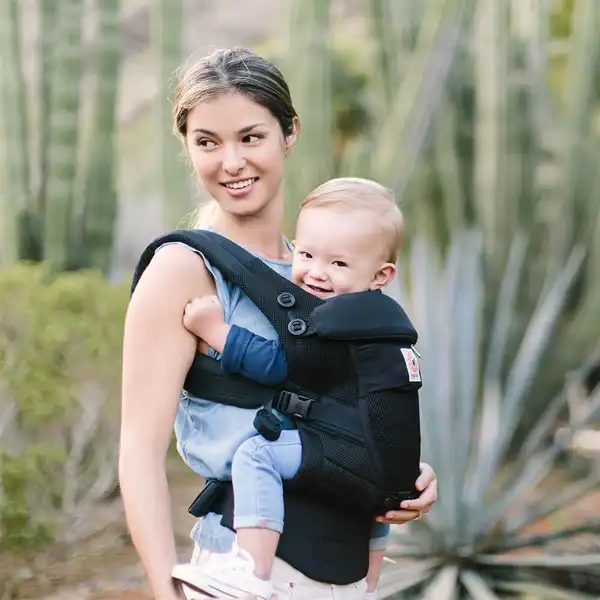
For hassle-free everyday use: Whether you’re shopping, going for a walk, or at home, a baby carrier should, above all, be easy to use. The Ergobaby Adapt SoftFlex Mesh can be customized to fit, making it a great choice for families looking for a practical carrier for various everyday situations.
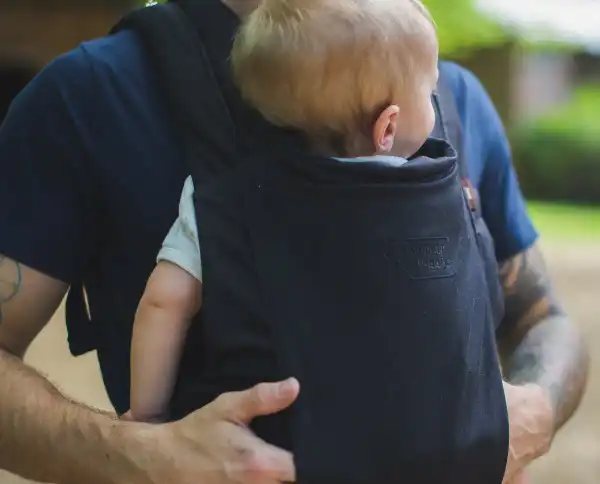
For eco-conscious families: If materials and manufacturing processes are important to you when making your choice, the Greentom Baby Carrier is worth a look. This model combines the classic functionality of a baby carrier with a resource-conscious approach to product design.
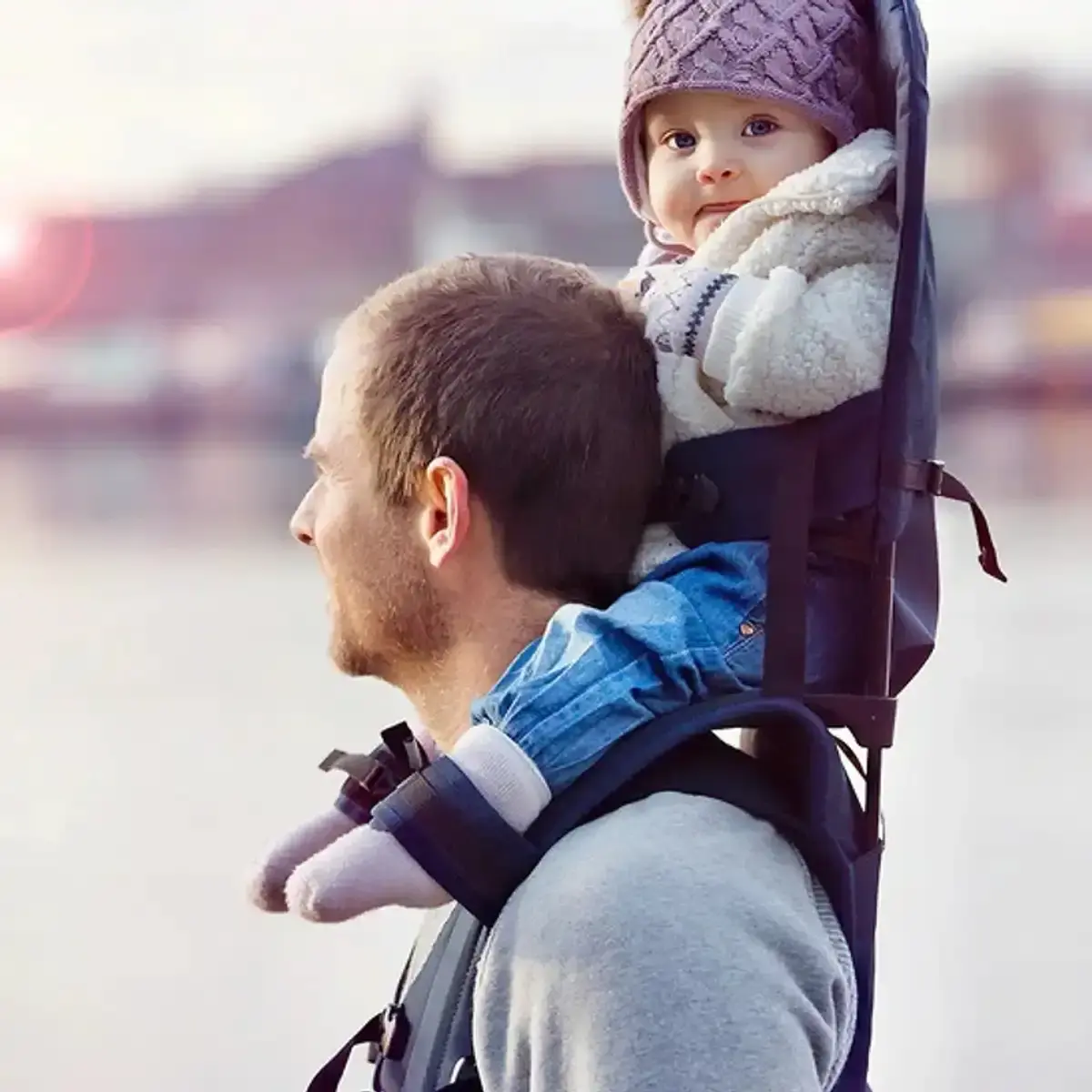
For outings and shared adventures: If your child can already sit upright on their own and hold their head up securely, a shoulder carrier can be a compact solution for when you’re on the go. With the MiniMeis shoulder carrier, the child sits elevated on your shoulders and can discover their surroundings from a new perspective. The carrier weighs just 1.6 kilograms and folds down compactly. According to the manufacturer, it’s suitable for use starting at around six months and up to a maximum child weight of 18 kilograms.
There are matching accessories available for longer outings. A sunshade provides shade while you’re out and about, while the MiniMeis backpack offers space for snacks, diaper supplies, and other essentials for your outing.
For warm days: In the summer, it’s worth taking a closer look at the material. Lightweight and breathable fabrics, as well as mesh panels, can help with air circulation, especially since the close physical contact between baby and carrier already results in additional heat exchange.
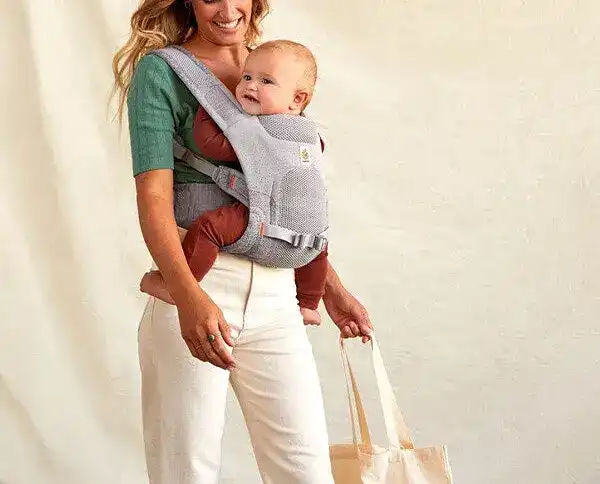
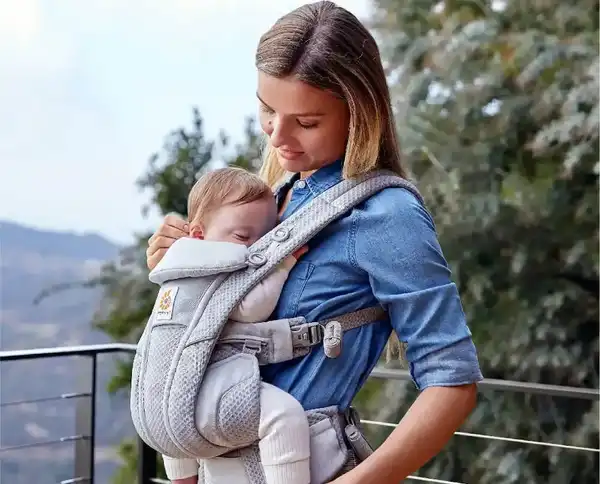
One example is the Ergobaby Omni Breeze. Its SoftFlex Mesh is designed for good airflow. Padded shoulder straps and additional support in the lower back ensure comfort while carrying. It’s particularly versatile thanks to its four carrying positions: Depending on the baby’s age and developmental stage, the baby can be carried facing the parent, facing forward, on the hip, or on the back. Padded shoulder straps and additional support in the lower back ensure comfort for the wearer.
The integrated pockets and the fact that the carrier is machine-washable also make it practical for everyday family life.
The Ergobaby Omni Breeze Baby Carrier

For families who love to hike: If you’re planning longer hikes with an older child, you might want to opt for a classic backpack carrier. The Thule Sapling is specifically designed for hiking and features an adjustable back and hip system. A 22-liter compartment offers additional space for snacks, a change of clothes, and other essentials for the road. According to Thule, the maximum child weight is 18 kilograms.
Ergonomics and Safety: What Really Matters in Every Baby Carrier
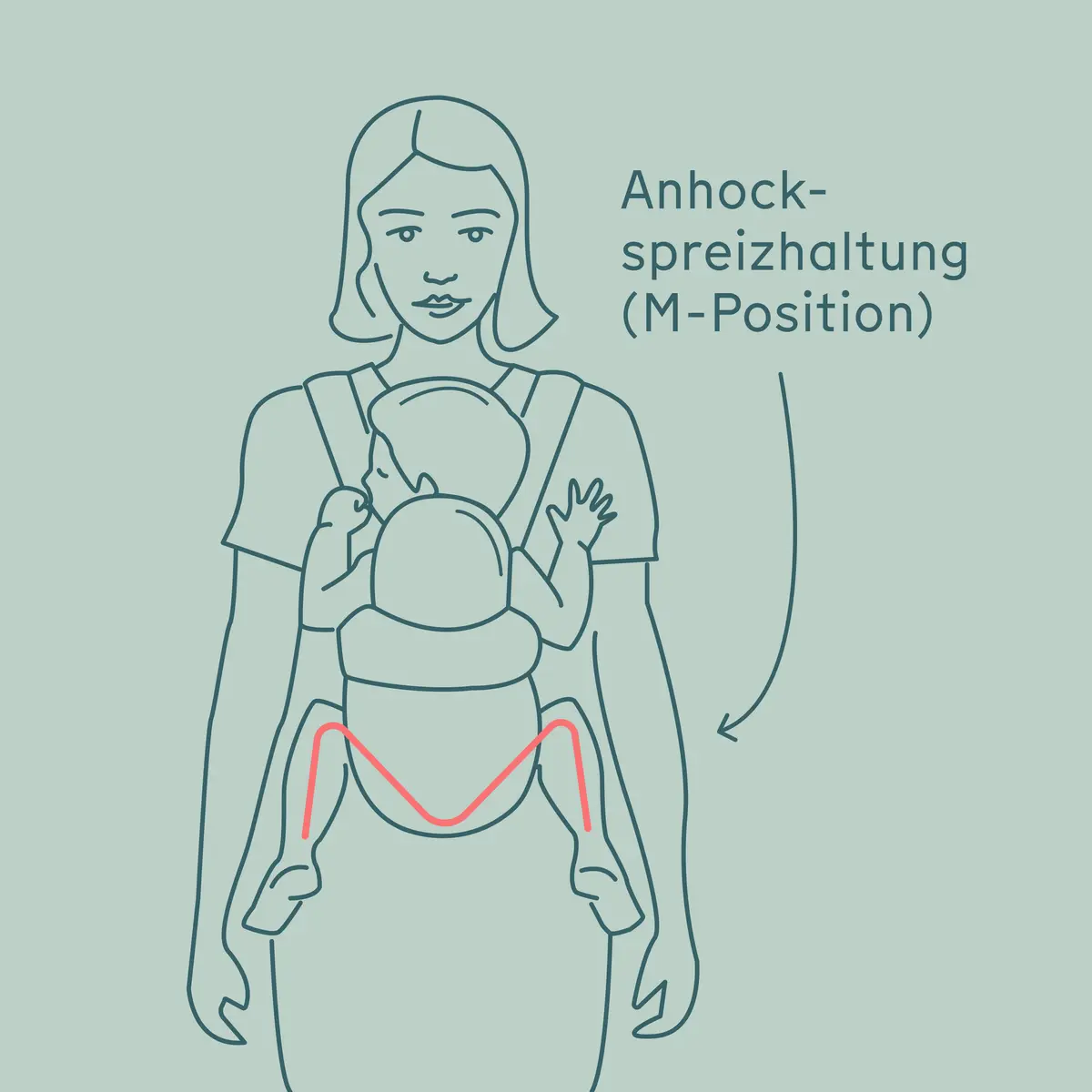
Regardless of the model, there are two things that should always be right. First is the so-called “crouch-spread” position, also known as the “M” position in everyday terms. In this position, the baby’s knees are higher than their bottom, and their back is gently rounded, which relieves pressure on the hips and supports healthy development, especially during the first year of life. For small babies, stable head and neck support is also essential, as they cannot yet hold their heads up on their own.
Second, the fit for the person carrying the baby. Wide, well-padded shoulder and hip straps, along with good adjustability, ensure that the back remains relaxed even during longer carrying periods and help prevent tension. If both of these points are met, it hardly matters which system a family chooses—the carrier will work well for both parties.
Try It Out Instead of Deciding Right Away
Perhaps the most honest answer to the original question is: You don’t have to know exactly right from the start. Babies change quickly, seasons come and go, and what fits perfectly today might be too small or too warm in just a few months. That’s exactly why StrollMe offers flexible baby carrier rentals instead of sales—choose from brand-new or lovingly refurbished options. This way, families can take their time trying out different models, materials, and carrying positions and simply switch if needed, without ever feeling like they have to commit forever. In the end, one thing remains above all else: closeness to your own child, without any unnecessary stress.


