
And with it usually come quite a few questions. When does it actually start? Should we start with purees or go straight to finger foods? What exactly does BLW mean? Do we need a high chair now? And how much of it should actually end up in the baby’s mouth—and not on the table, floor, clothes, and dog?
First things first: introducing solid foods doesn’t have to be a competition. It’s not about replacing entire meals as quickly as possible or choosing “Team Puree” or “Team BLW” for good. It’s about your baby discovering a whole new world step by step: different tastes, textures, and smells.
Eating together at the family table can also be part of this from the very beginning. As soon as your baby’s first attempts at eating go well, you can offer suitable portions of the family meal, adjusted accordingly. What’s important here is safe, age-appropriate preparation and foods that are suitable for babies.
When to Start Solid Foods?
As with so many developmental milestones, there isn’t a single day when your child is suddenly ready for everything when it comes to starting solid foods.
The World Health Organization (WHO) recommends introducing solid foods around six months of age. The “Gesund ins Leben” network suggests starting solid foods sometime between the beginning of the 5th and the beginning of the 7th month of life and emphasizes that the child’s individual development should also be taken into account.
So instead of just looking at the calendar, it’s especially important to consider what your baby can already do.
Ready for your baby’s first attempts at eating? Here’s what to look for:
✓ Your baby can control their head well and sit upright with support.
✓ They can take food into their mouth and swallow it, rather than pushing it right back out with their tongue.
✓ They’re increasingly reaching for things on their own and bringing them to their mouth.
✓ They show interest in food and in what’s happening on your plates.
This interest in food is often seen as a clear sign that it’s time to start. However, that alone isn’t enough. Physical and motor development also play an important role.

Laura from Tiny Roots is a certified nutritionist specializing in pregnancy, breastfeeding, and infants. She recommends always considering the various signs of readiness for solid foods together and not relying solely on whether a baby curiously reaches for their parents’ food. This is because during this phase, the digestive system continues to develop and is increasingly adapting to foods other than milk. Introducing solid foods too early can place unnecessary strain on the baby’s still-developing digestive tract and may lead to digestive issues, for example.
That’s why it’s important not only to watch for curious glances toward the plate but also to consider head control, sitting upright, grasping, and swallowing when making this decision.
If you’re unsure about the right time, a qualified nutritionist or solid food consultant can help. For persistent digestive problems, discomfort, or other medical questions, your pediatrician’s office is the right place to turn.
By the way, the first spoonful doesn’t have to be a full meal. Maybe your baby will happily eat two spoonfuls and then stop after the third. Maybe a piece of soft food will end up in their mouth, then on the table, and finally on the floor. It’s all part of the process.
Even when eating, babies should be allowed to show their own hunger and fullness cues. The WHO therefore recommends what’s known as “responsive feeding”: paying close attention to these cues, encouraging eating, but not forcing it.
After all, solid foods aren’t just about eating. It’s also about feeling, smelling, tasting, grabbing, squishing, and discovering all the different things this food can do.
BLW or Baby Food: What’s the Difference?
BLW stands for Baby-Led Weaning. With this approach, suitable foods are offered in a way that allows the child to pick them up, bring them to their mouth, and eat them on their own. In contrast, the traditional approach to starting solid foods typically focuses on purees and spoon-feeding.
However, it’s not necessary to strictly choose just one approach.
Purees, BLW, or both?
Pureed food: Foods are offered in pureed or mashed form.
BLW: Suitable foods can be picked up and explored independently.
Combination: Purees and suitable finger foods can complement each other in everyday life.
Pureed food and safely prepared finger foods can generally both be part of the introduction to solid foods. It is therefore not necessary to permanently commit to one method or to initially offer only finely pureed food.
Regardless of the approach chosen, foods should always be prepared in an age-appropriate manner, and potential choking hazards should be taken into account. Whole nuts, whole grapes, or hard raw foods, for example, are not suitable for young children in this form.
Instead of “BLW or baby food?” the key question might therefore be: Which approach to introducing solid foods works best for our child and our family’s daily routine?

A Little Inspiration for Everyday Weaning
Solid foods don’t have to consist of an elaborate recipe every day. Especially in the beginning, simple foods and just a few ingredients can be more than enough. What makes it exciting are the different flavors, textures, and nutrients.
Laura from Tiny Roots recommends not only offering fruits and vegetables but also incorporating nutrient-rich foods and a variety of flavors from the very beginning. Iron, in particular, plays an important role in solid foods.
A few simple ideas:
Soft vegetables for grasping: Broccoli, zucchini, squash, or carrots can be cooked until tender or roasted in the oven and served in bite-sized pieces that are easy to grasp. These can be paired with a suitable source of fat, as fat helps the body absorb fat-soluble vitamins, among other things.
A different take on bananas: A soft banana can be mashed into a puree or cut into long, easy-to-grip pieces as finger food. The NHS also lists banana sticks as a simple finger food idea starting around six months.
Avocado for purees and finger foods: Ripe avocado can be easily mashed or—depending on the baby’s abilities—served in appropriate-sized pieces. It is naturally high in fat and pairs well with other foods.
Include iron-rich foods: One option, for example, is soft, thoroughly cooked sticks of ground beef, which are also easy to prepare in the oven. In addition, there are other animal and plant-based sources of iron that can be used to create a varied weaning diet.
Soft fruits for exploration: Ripe pears or mangoes can be peeled and offered in large, easy-to-grasp wedges. Very small foods are often still difficult for babies just starting solids to pick up on their own, as the pincer grip doesn’t develop until later—usually around 9 months.
With small, round foods, shape also comes into play: Grapes, for example, should not be offered to small children whole. If their motor skills are already developed enough to handle them, they should be quartered lengthwise. Blueberries, for example, can be mashed for younger babies or cooked or baked into meals.
Whether it’s pureed food or finger foods: babies can be introduced to a variety of appropriate textures right from the start of solid foods. Finger foods do not necessarily have to be introduced only after a prolonged period of exclusively pureed food. The key is that the shape, size, and texture of the food match the child’s developmental stage and that typical choking hazards are avoided.
What about fruit feeders:
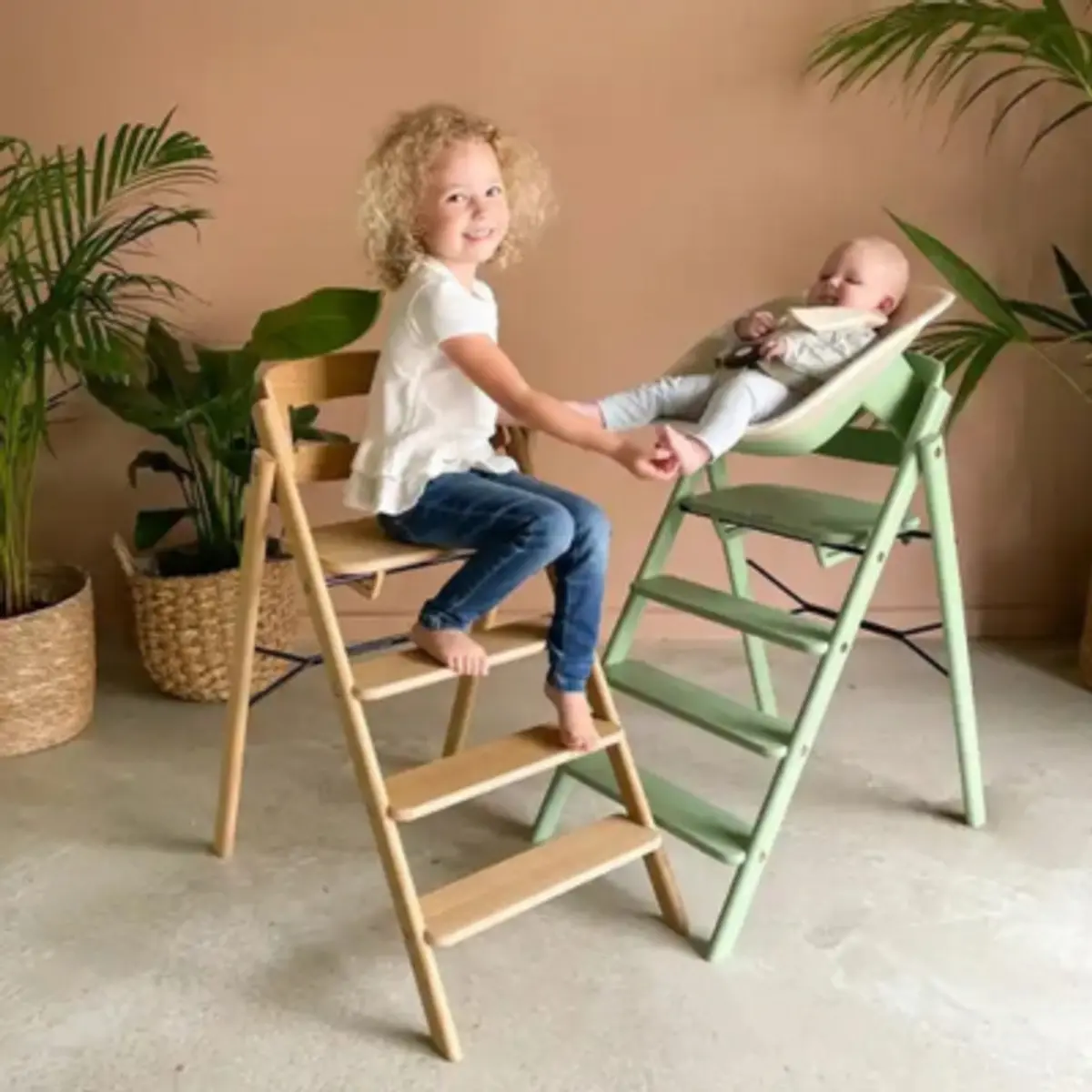
A Place of Their Own at the Family Table
As you begin introducing solid foods, the high chair becomes increasingly important. It provides a designated spot for shared meals and, above all, should ensure a safe and comfortable seating position.
Here’s what to look for in a high chair:
✓ Stable and secure base
✓ Proper seating position
✓ Adjustable footrest
✓ Easy-to-clean materials
✓ Optional tray
✓ Can be used for as long as possible or as the child grows
StrollMe offers a variety of solutions for this. The Bugaboo Giraffe, for example, can be adapted to different developmental stages. The seat and footrest are adjustable, and the high chair can be supplemented with the right accessories for the weaning period.
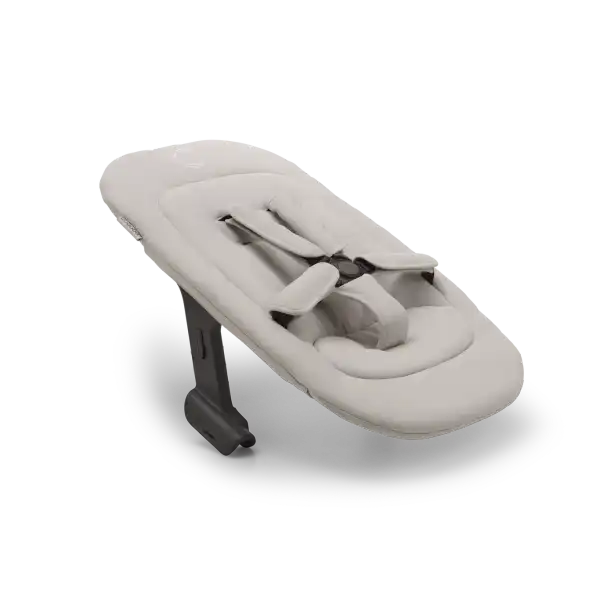



The Moji Yippy high chair also grows with your child and, with its Starter Set and table, offers the right accessories for those first meals. The UPPAbaby Ciro and the KAOS Klapp are additional high chairs available to suit different needs and living situations.
Which high chair is the best fit therefore depends on your daily routine: How much space do you have available? Should the chair grow with your child for as long as possible? Do you need a separate tray, or should the child sit directly at the dining table?
Since these needs can change as your child grows, you can rent high chairs—as well as baby bouncers—from StrollMe. This way, you can choose the model that best fits your family’s current stage of life.
Not just eating along, but joining in too
As children get older, mealtime can take on a new dimension: getting involved. Washing vegetables, adding ingredients to a bowl, stirring dough, or simply watching what’s happening on the countertop. Small tasks can gradually involve children in meal preparation.
For toddlers who can’t yet reach the countertop, a learning tower can be handy. The Tuki Learning Tower raises children to a suitable height and can be adjusted as they grow.
The matching exploration cloth allows little explorers aged 9 months and up to safely participate at eye level. It’s tear-resistant, machine-washable, and can support up to 12 kg. StrollMe specifically markets the learning tower for activities such as cooking, baking, or even washing hands.
Of course, it’s important to always supervise children in the kitchen and keep hot, sharp, or other dangerous objects out of reach.
This way, the weaning period can gradually become more than just eating together.


